Schlagwort-Archive: TIERBABY

What to Do if You Find a Baby Bird

What to Do if You Find a Baby Bird

Newborn-Baby-Bird

Now that warmer weather is here, young birds who are learning to fly may be spotted on the ground. Often, when people come across these fledglings, they assume the birds need help and will try to save them. While most fledglings don’t need assistance, it’s good to know how to spot the ones who do and to identify nestlings, who are too young to be out of the nest at all!

If you find a young bird out of the nest and on the ground, follow this guide to determine if he or she needs any help as well as the best way to swoop in to offer assistance if necessary:

Is the bird a nestling or a fledgling?

  • Nestlings

Nestlings have few or no feathers, and if found on the ground, they need your help. These baby birds are too young to leave the nest and are unable to fly. If you’ve found an uninjured baby bird, please proceed to How to Save Uninjured Nestlings below.
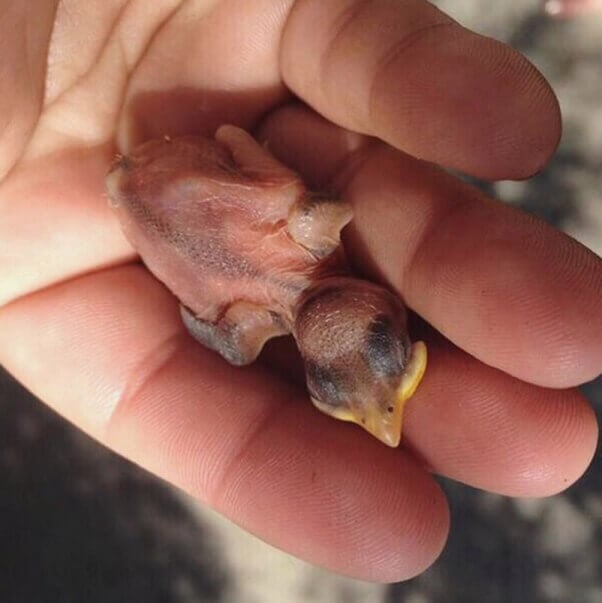
Rescued Baby Bird Nestling

  • Fledglings

Fledglings are juvenile birds who have a mix of fuzzy down and adult feathers and are learning to fly. You may come across them hopping along on the ground, perching on low-hanging branches, or hiding under bushes, but as long as they’re healthy, just let them be.

Note: Fledglings are often “rescued” from their natural environment when they don’t need to be.
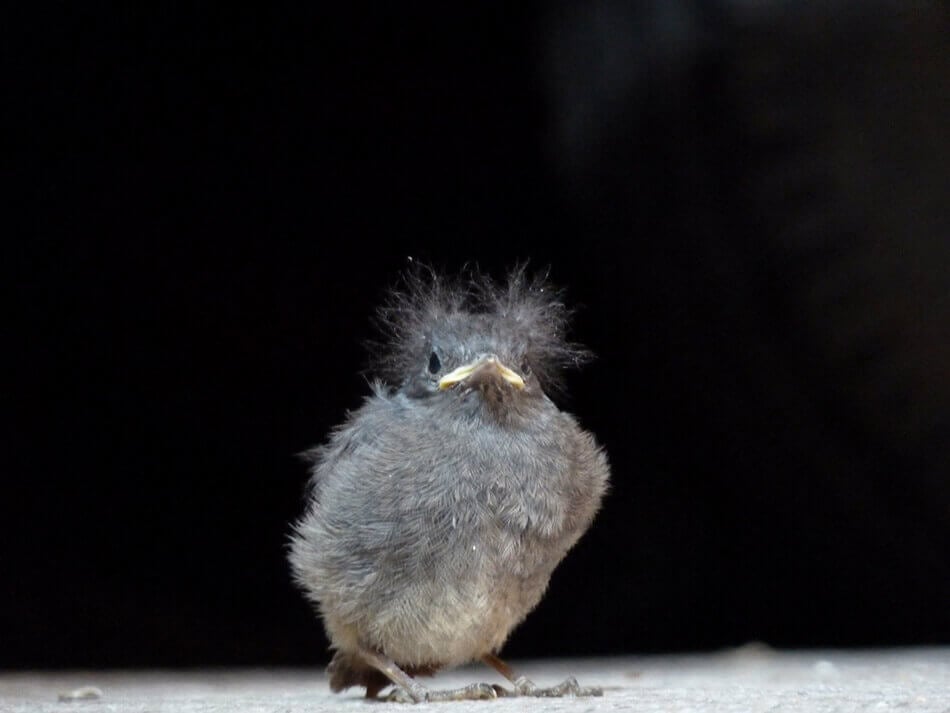
Fledgling
P1000467 | Florian Straub | CC BY-SA 2.0 

Is the fledgling healthy?

Healthy fledglings can stand upright and will tuck their wings tightly against their bodies. If you find a fledgling on the ground, answer the questions below. If the answer to any of these questions is yes, proceed to How to Save Orphaned or Injured Birds below.

  • Are there bloody wounds, wet feathers, legs that aren’t bearing weight, drooping wings, or matted or highly ruffled feathers?
  • Is the bird lying on his or her side or back or scooting along the ground on his or her stomach?
  • Is the bird’s body or head tilting to one side? Is there blood around the nostrils?
  • Is the bird cold to the touch and/or noticeably shivering?
  • Is the bird in the wide open, nowhere near trees or bushes?
  • Are other animals, such as dogs or cats, stalking the bird?
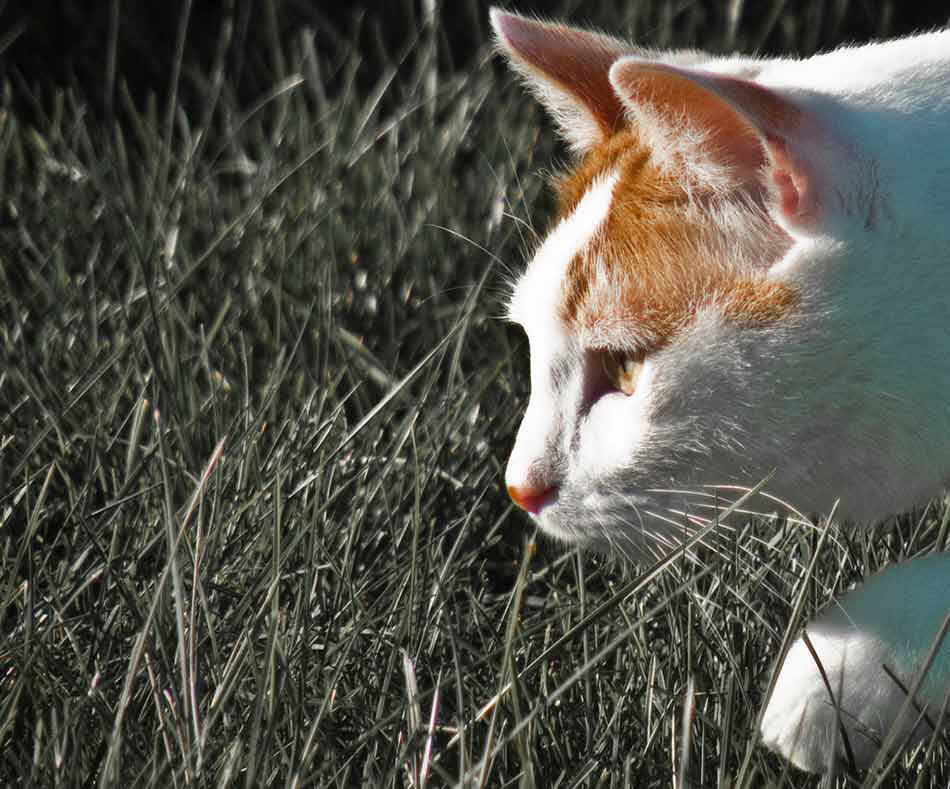
Cat stalking prey
Stalking | Michael Himbeault | CC BY 2.0 

How to Save Uninjured Nestlings

Once you’ve identified a healthy nestling, follow these steps to save baby birds!

1. Try to Locate the Nest

If you come across a fallen nestling who isn’t injured, shaking, or weak and you can locate the nest, use clean or gloved hands to place the bird back into the nest quickly. If you’re able to place the baby back into his or her nest, skip to step 3. If you can’t find or reach the nest, move on to step 2.
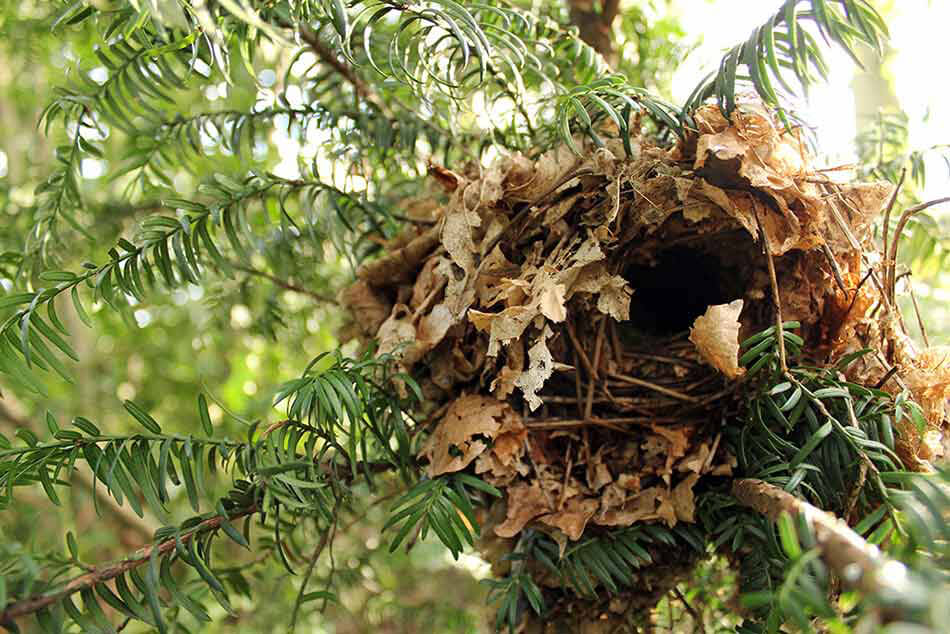
Empty Bird Nest
Wren Nest 21.04.12 | Nottsexminer | CC BY-SA 2.0 
2. Create a Surrogate Nest

If you can’t see or reach the original nest, make one out of a small basket, kitchen strainer, or small plastic container with holes punched in the bottom. Ideally the “nest” should be cereal-bowl shaped, well padded with tissue paper, and of a non-slippery material, otherwise the bird’s legs could spread out sideways and become deformed.
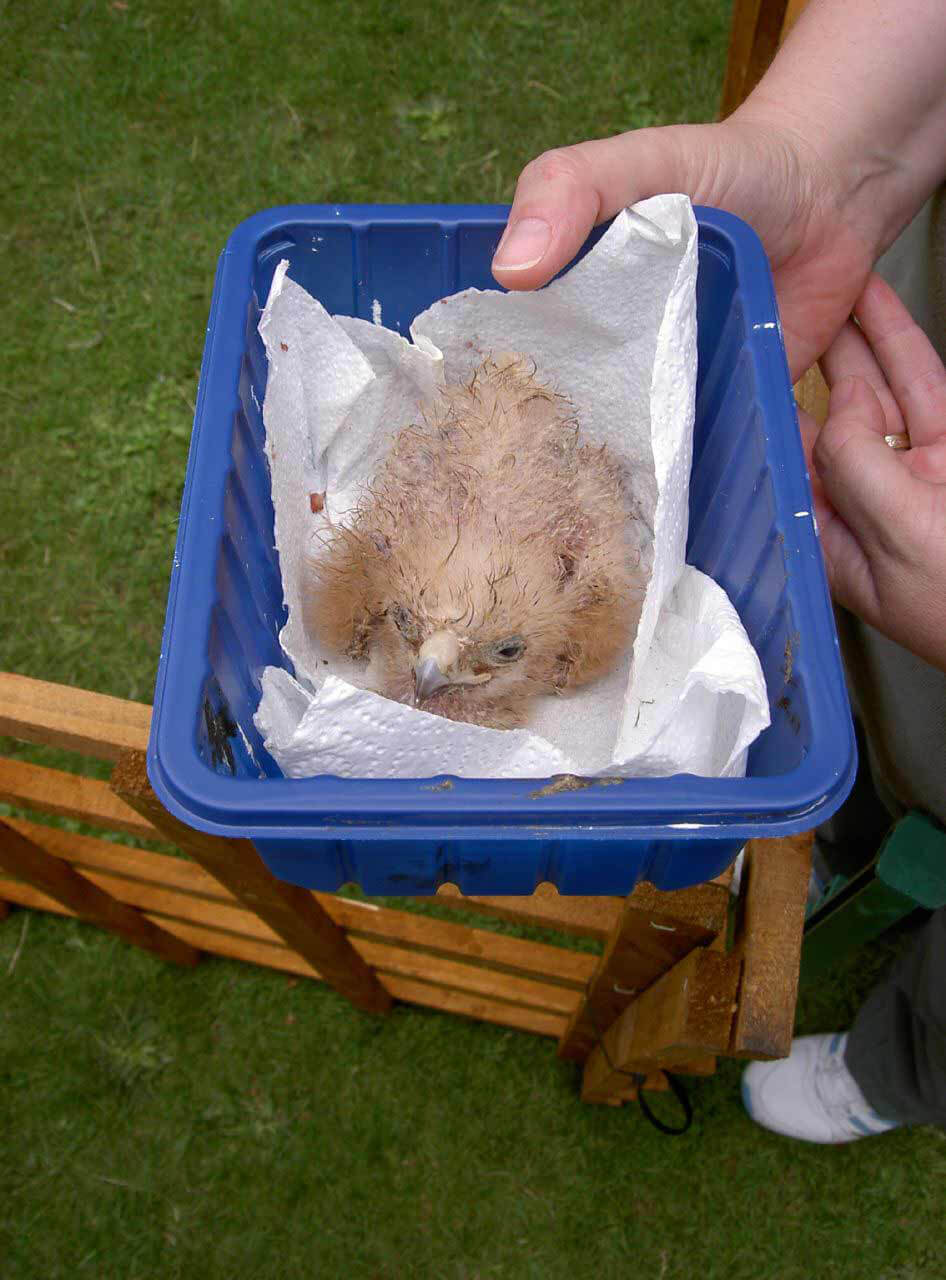
Fledgling Hawk in make-shift est
10 day old Harris Hawk | Ray | CC BY 2.0 

Fasten the nest in a sheltered area of the tree closest to the bird’s original location but out of range of any cats or dogs. Parents of nestlings will continue to feed them as long as they remain within 10 yards, they’re responsive, and no people or companion animals are lingering nearby.

3. Monitor the bird

Watch quietly for a few hours to make sure that a parent comes back to feed the nestling. If the parent doesn’t return, follow the steps below for saving an orphaned baby bird.

How to Save Orphaned or Injured Birds.

Once you’ve identified an orphaned, injured, or ill nestling fledgling, follow these steps:

1. Secure the Bird

Use clean or gloved hands to place the bird inside a cardboard box lined with paper towels.
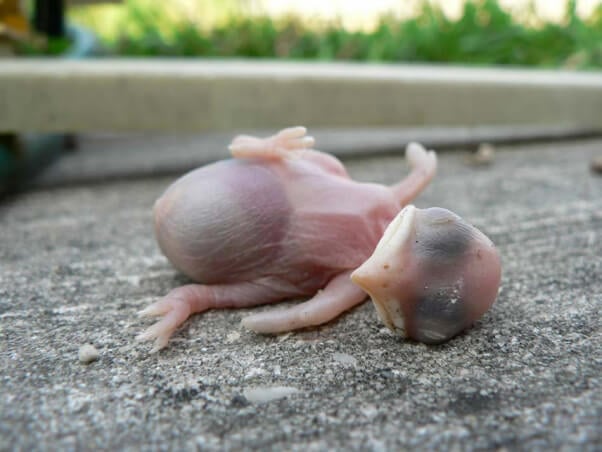
Newborn-Baby-Bird
dying baby bird | Rick Kimpel | CC BY-SA 2.0 
2. Keep the Bird Warm

While you’re working to get help for the animal, keep him or her warm and quiet by placing a heating pad on the lowest setting under half of the box or placing a small hot water bottle inside the box. Then put the box in a closet or another warm, dark, quiet, and safe place away from people and animals.
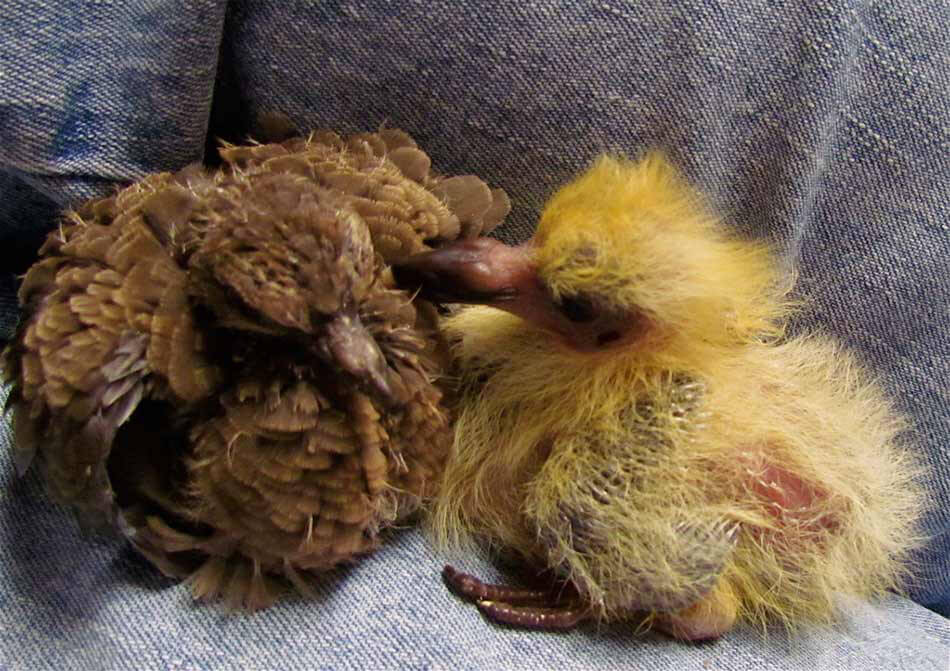
Two fledglings
Baby Dove And Baby Pigeon Rehabbers | Audrey | CC BY 2.0 

Note: Do not offer the bird any food or water and do not attempt to care for the animal yourself.

3. Get Help

Contact a wildlife rehabilitator and arrange to transport the bird to a licensed facility immediately—every second counts!
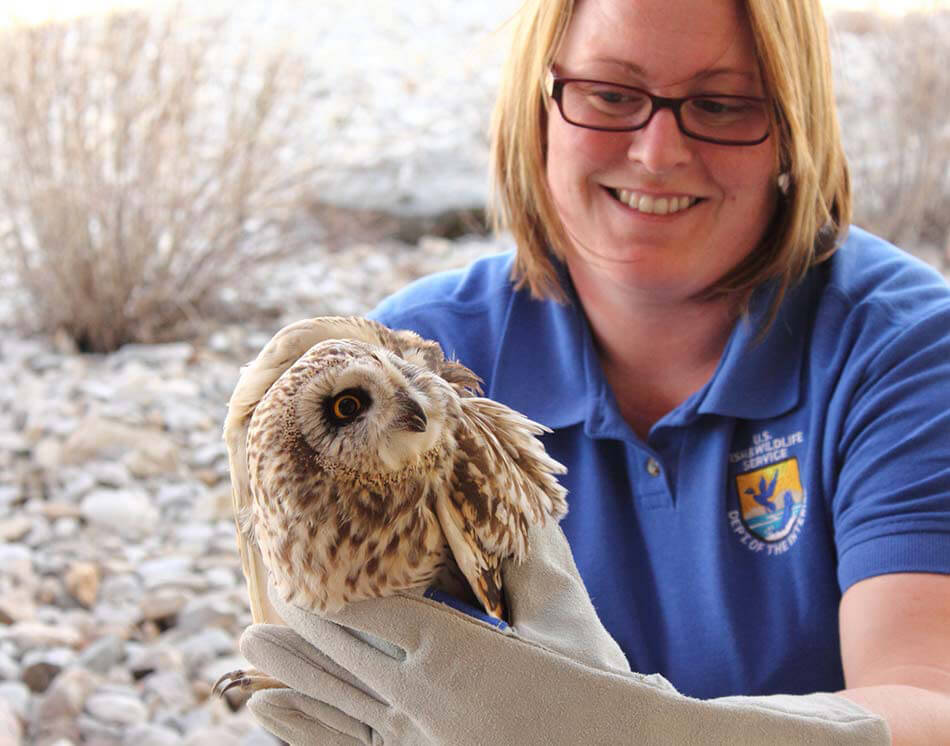
Wildlife Rehabilitator with Owl
Short-eared Owl | USFWS Mountain-Prairie | CC BY 2.0 

If you ever come across an injured animal and are unsure how to help, contact a local wildlife rehabilitator or an animal hospital.

If you want to be an animal-saving pro, keep a rescue kit on hand, read up on how to save animals in wildlife emergencies, and join the Action Team!

Join the Action Team!

Nania braucht dringend unsere Hilfe

Jeztzt Spenden Facebook Follow on Twitter
Sie muss rund um die Uhr versorgt werden
„Nania“ schrie verzweifelt nach ihrer Mutter, ihrer Schwester oder einem anderen Herdenmitglied, um Hilfe und Schutz zu bekommen. Von ihrer Herde fehlte jedoch jede Spur. Vermutlich wurde das kleine Kalb aus Burkina Faso beim Überqueren eines Flusses von den anderen getrennt.
Nania hatte großes Glück, denn Einheimische hörten ihre verzweifelten Schreie und retteten sie mit Unterstützung von Mitarbeitern der Wildtierbehörde. Allerdings benötigte sie dringend zusätzliche Hilfe von Experten. Deshalb baten uns ihre Retter um Unterstützung.

Jetzt braucht Nania Ihre Hilfe.

Bitte helfen Sie, damit ihre Pfleger sie rund um die Uhr versorgen und ihr die Wärme und Geborgenheit geben können, die sie so dringend braucht. Außerdem muss sie alle drei Stunden mit einer nahrhaften Spezialmilch gefüttert werden. Und sie benötigt unbedingt eine neue „boma“. Damit ist ein geschütztes Gehege gemeint, in dem sie sicher untergebracht ist, während sie wichtige Fertigkeiten erwirbt, um in Freiheit zu überleben.

Bitte helfen Sie uns, Nania zu versorgen, bis sie bereit ist, sich einer wilden Herde anzuschließen, Außerdem helfen Sie uns mit Ihrer Spende, notleidende Tiere weltweit zu retten.

Jetzt spenden
Aber auch jeder andere Betrag, den Sie erübrigen können, hilft, Nanias Überleben zu sichern und Tiere weltweit zu retten, zu rehabilitieren und in sichere Schutzgebiete auszuwildern.

Wir müssen Nanias neues Gehege schnellstmöglich fertigstellen, damit sie die lebenswichtigen Fertigkeiten erlernen kann, die sie für ein Leben in der Wildnis braucht.

Ich danke Ihnen für alles, was Sie für die Tiere tun!


Celine Sissler-Bienvenu

Direktorin IFAW Frankreich und frankophones Afrika
Vielen Dank für Ihre Spende an den IFAW. Die Spenden an den IFAW fließen generell allen Tierschutzprojekten der Organisation zu und werden jeweils dort eingesetzt, wo Geld am dringendsten benötigt wird.
Folgen Sie uns
Facebook   Twitter   Youtube
International Fund for
Animal Welfare
Max-Brauer-Allee 62 – 64
22765 Hamburg
Impressum

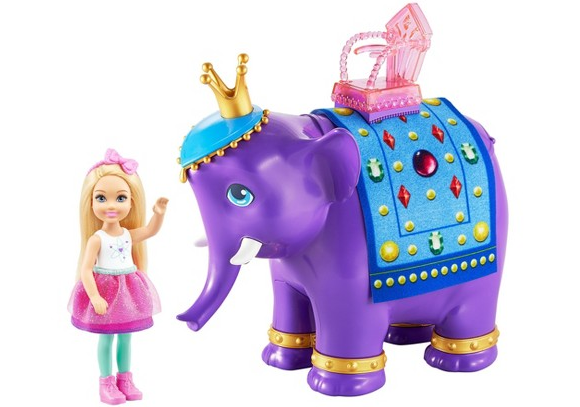
Chelsea here probably has no idea that elephants used for rides are typically taken away from their mothers as babies, viciously beaten, and controlled under the constant threat of being gouged with a sharp weapon.

https://action.peta2.com/page/5427/action/1

The company is selling a sad-looking elephant dressed up for human amusement and a little girl doll that can sit in a chair on the animal’s back and use the elephant as a vehicle.

Chelsea here probably has no idea that elephants used for rides are typically taken away from their mothers as babies, viciously beaten, and controlled under the constant threat of being gouged with a sharp weapon. Other kids probably don’t know that either—and that’s why this toy is so dangerous.

But Mattel does know, so we can’t even venture a guess as to why it wanted to create this terrible toy—which needs to be discontinued ASAP.

Tell Mattel to Stop Promoting Elephant Exploitation

https://action.peta2.com/page/5427/action/1

For all animals,

VIDEO: This Zoo Tortures Baby Elephants

https://www.peta2.com/save-animals/video-zoo-tortures-baby-elephants/

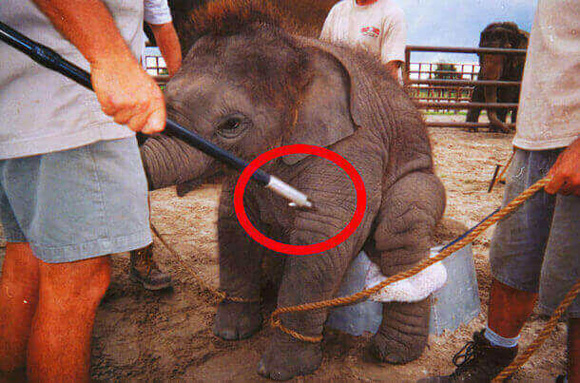
At the zoo, baby elephants are regularly taken from their enclosure to a nearby facility, where trainers torture them repeatedly with bullhooks—sharp metal weapons resembling a fireplace poker—in order to prepare them for circus-like shows that attract visitors.

Their helpless mothers cannot protect them, and if they try, they’re tortured with the bullhook themselves. 🙁 This all happens out of public view so that the paying visitors don’t see it.

Whenever the baby elephants don’t perform circus tricks like sitting, turning, or standing on their hind legs, zookeepers gouge the animals’ sensitive skin. Although their skin appears tough, in reality, it’s so delicate that they can feel the pain of an insect bite, just like we do.

This abuse is the rule, not an exception. The elephant keepers always carry bullhooks and use them to beat, push, or threaten the elephants.

You can help elephants! Just share this video on Facebook or Twitter—and urge everyone you know never to visit a roadside zoo or circus again. Submit a screenshot of your share for 1,000 points.

https://www.peta2.com/save-animals/video-zoo-tortures-baby-elephants/