Schlagwort-Archive: peta2

Urge Chinese Retailer Meters/bonwe to Stop Selling Fur

https://support.peta.org/page/6557/action/1

Whether it’s for jacket trim, a full-length coat, or fluff on a shoe, animals are violently killed in the fur industry. That’s why PETA Asia is putting the pressure on Chinese retailer Meters/bonwe to end its use of fur trim on coats and jackets.
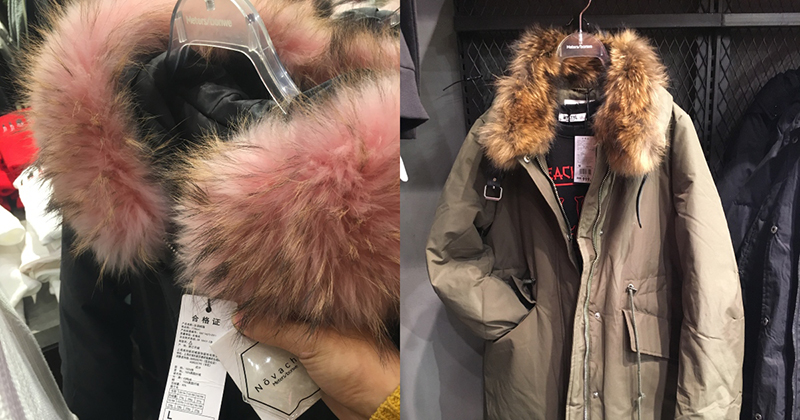
fur trimmed coats

Eyewitness investigators have documented horrific abuse of animals on fur farms in China—the country from which Meters/bonwe exclusively sources its fur. Animals on these farms are confined to filthy cages for their entire lives before they’re bludgeoned, anally electrocuted, gassed, or even skinned alive. One eyewitness captured video footage showing a raccoon dog—the same species killed for Meters/bonwe’s coats—who had been skinned alive muster the strength to lift his bloody head and look at the camera.

All fur comes from tortured animals: There are no penalties for abusing animals on fur farms in China. Don’t let Meters/bonwe continue to profit from animal suffering. Help PETA Asia persuade this company to drop fur now.

https://support.peta.org/page/6557/action/1

7 Ways to Be Less Trashy for Animals

https://www.peta2.com/vegan-life/less-trashy/

Profile picture of
Let’s get real: Humans are trash 🗑️ to other animals when they throw their garbage 🗑️ on the ground.

Birds get their beaks wrapped or legs and wings tangled up in discarded fishing line. Animals step in gum, which can become matted in their fur or feathers 🤢. And hungry animals desperate for even just a few crumbs often get their heads stuck in discarded cans, cups , and jars.

Animals suffer from the carelessness of humans 😞—and it’s time that we started taking care of the only planet we call home. And we could all use some tips on cleaning up our act so that animals can go on living their best lives without getting entangled in discarded plastic six-pack rings or getting their heads stuck in jars.

Western Gull With Wire Around Foot. Added red circle for emphasis. | docentjoyce | CC by 2.0 

1. Rinse out all cans and then put the tops inside them (so animals won’t cut their tongues!). Crush the open end of the can as flat as you can.

Welcome To My Humble Abode | Jackie | CC BY 2.0 

2. Cut open empty cardboard and plastic containers so that squirrels and other small animals can’t get their faces or heads trapped in them. If you have empty jars, be sure to scrub them out and cap them before putting them into the recycling bin or trash.

3. Cut apart all sections of plastic six-pack rings, including the inner diamonds.

Wikipedia Commons 

4. Choose paper bags at the grocery store, or better yet, take your own reusable canvas bags, which help prevent wildlife habitats from being destroyed.5Don’t use plastic straws. If you really need a straw, try a reusable metal or glass one Have you seen the video of the turtle with the straw being pulled out of his bloody nose?! 😭

6. Be sure to cover up your garbage and throw away all items in a bin that can’t be accessed by animals looking for food. Seal trash cans using bungee cords on lids.

Nothing like a bin full of trash. | Steve Baker | CC BY-ND 2.0 

7Recycle plastic. Every year, around 8 million metric tons of plastic, including fishing gear, go into the ocean. Discarded plastic fishing nets often remain intact and can travel long distances, entrapping and killing not only fish 🐟 but also marine mammals 🐬 and birds 🦆. Recycling is one of the best ways to combat this huge problem, since plastic debris is the cause of more than 100 million marine deaths every year. (And of course, those who fish should help protect animals and the environment by stopping.)

With 7 billion peeps on the planet and counting, it’s important that we take responsibility for making the Earth a safe and comfortable—and less trashy—home for all. Ready to do more? Check out these tips for fighting climate change.

#WhereIsLoretta?

Action Alert

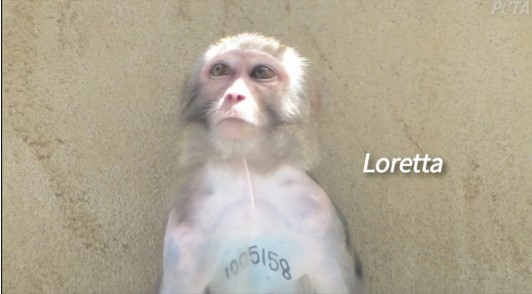
Tattooed in black ink across her chest, the numbers 1005158 only became more visible as her hair fell out in patches, likely as a result of the stress that she endured at Primate Products, Inc. (PPI), a notorious facility that imports and warehouses primates before selling them to laboratories. A PETA eyewitness gave Loretta a name, likely the first act of compassion she’d ever been shown.

A team of U.S. Department of Agriculture inspectors confirmed PETA’s findings, citing PPI for at least 25 violations of nine animal-welfare regulations and opening an investigation of the facility. Three years later, that investigation is still ongoing.

So where is Loretta today? It’s time that PPI released information about her whereabouts. Please join our efforts to find her.

#WhereIsLoretta

https://headlines.peta.org/who-is-loretta/

Thank you for your compassion for animals.

Sincerely,

Nonhuman Animals: We’re More Like Them Than We Think

https://www.peta2.com/save-animals/nonhuman-animals-were-more-like-them-than-we-think/

As animals ourselves, humans should pay closer attention to the things that we have in common with other members of the animal kingdom.

GIF

Via GIPHY

Do you like to sing? So do pigs. They sing to their young while they’re nursing. They communicate with one another constantly, and it’s been found that they use more than 20 oinks, grunts, and squeals in various situations.

Do you like hanging out with friends? So do cows, who prefer to spend time with other cows and who form complex relationships, as dogs in packs do. These gentle animals sometimes hold grudges against other cows who treat them badly. They even mourn the deaths of others and can shed tears.

Do you like going outside with friends on warm days to enjoy the sun? So do chickens, who love to sunbathe and socialize with others. People who have spent time with these birds know that each one has a unique personality.

Let’s get real for a second.

Every year, billions of animals 🐖 🐄🐤 suffer on factory farms because humans want to use their bodies. Imagine how you would feel if you were crammed into a tiny wire cage that was stacked on top of other cages in a huge warehouse and you were unable to turn around or even lift an arm 😠. And consider what it would be like if your tail were chopped off and the ends of your teeth were clipped—and you never received any pain relief—just weeks after you were born. Imagine the horror 😨 that you would feel as you were being dragged away from your mother 😢, kicking and screaming, only to be confined to a crate and starved so that you’d become weak and humans could eat your tender body.

Here’s how you can help:

1. Share this video on your favorite social media site. Here’s an example of what to write:

2. Submit a screenshot of your post for 1,000 points.

And while you’re at it, be sure to check out and order peta2’s free “Guide to Going Vegan” and stickers here.


Oops! It looks like you’re not logged in to your peta2 account. Log in now to complete this mission and we’ll hook you up with peta2 points for helping animals. (You can use those points later to get FREE peta2 swag, like T-shirts, books, posters, and more.)

LOG IN to peta2.
Not part of peta2 yet? Join right now for FREE!

AAA: Stop Supporting Orca Prison!

https://action.peta2.com/page/1651/action/1

Would you want to live your life trapped in a room the size of your bathtub? AAA CEO Robert Darbelnet probably wouldn’t, either.

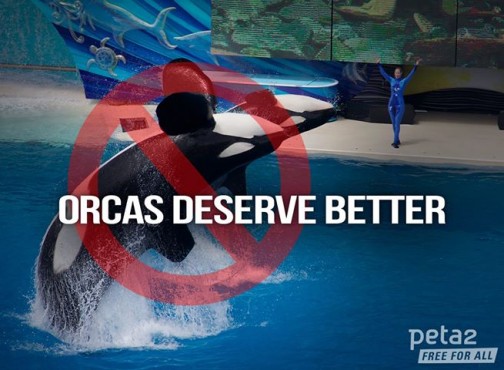
So why is AAA promoting SeaWorld—where highly intelligent orcas are forced to live in tiny tanks and perform silly tricks to entertain humans?

It’s been more than four years since the release of the documentary Blackfish—whose „star,“ Tilikum, died after 33 years in a concrete tank—but orcas at SeaWorld are still swimming in endless circles and breaking their teeth by gnawing in frustration on the concrete corners and metal bars of their tiny tanks. Other dolphins are still being impregnated, sometimes forcibly after being drugged; a polar bear died after her companion of 20 years was torn away from her; and three infant marine mammals, including a 3-month old baby orca, died in just three months.

orca seaworld

SeaWorld deprives orcas and other animals of everything that is important to them, and the unnatural conditions in SeaWorld’s chlorinated, barren tanks drive them crazy.

Tell Robert Darbelnet to take a stand against SeaWorld’s cruelty to animals by ending its promotions of SeaWorld! And don’t forget to follow up with a polite call to AAA at 407-444-8402 urging the company to end its affiliation to SeaWorld. (AAA’s office is only open from 8:30AM ET to 5:15PM ET.)

https://action.peta2.com/page/1651/action/1

Tell airports to ditch glue traps …

https://action.peta2.com/page/4763/action/1

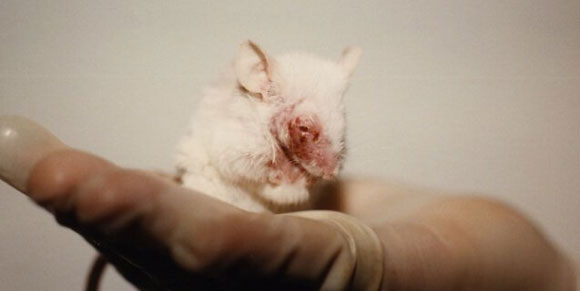
Have you ever seen an animal suffering after being caught on a glue trap?

As they struggle to escape, patches of their skin and fur are torn off. Bleeding, exhausted, terrified, and immobile, they have no choice but to wait—in misery— to die.

Glue trap users are instructed by the manufacturer to throw trapped animals into the garbage. THE GARBAGE. They can be left to suffer for days, until they die of starvation, dehydration, or stress—or by being crushed under a pile of more garbage.

After PETA kindly explained why glue traps are cruel AF, 100 U.S. airports committed to banning them. But some have been unresponsive or have flat-out refused to prohibit them.

Inflicting agonizing and prolonged deaths on tiny, defenseless animals—is that really who you want be, airports? We have higher hopes for you.

Tell These Airports to Ban Glue Traps Today!

For all animals,

Like You, Only Different

peta2’s campaign will change the way you think about animals.

https://campaigns.peta2.com/like-you-only-different/

Just like humans, animals love and nurture their young, get frustrated from a lack of mental stimulation, and want to live free from harm. Chickens dream when they sleep, elephants use tools to accomplish tasks, and dolphins can recognize themselves in a mirror and have been seen examining their own tongues and eyes.

Animals are capable of solving problems, anticipating the future, learning from past mistakes, recognizing old friends, showing appreciation to those who’ve helped them, enjoying music, communicating with each other, and showing empathy for others.

Emotions, empathy, problem-solving, caution, teamwork, rituals, the will to survive … these things are not unique to humans. Consider the following examples:


  • When Thomas the orphaned chimpanzee died, his companion, Pan, grieved for him. Many of the other chimpanzees touched Thomas’ body, and one dominant female brushed his teeth with grass before his corpse was taken away.


  • A group of mother sperm whales in the Sargasso Sea formed a babysitting circle, taking turns to watch over each other’s calves while the others hunted for food. The babysitters even allowed the other calves to nurse if they were hungry.


  • Some crows use cars to crack walnuts. They let the cars drive over them and then wait until the traffic light turns red before flying down to scoop up the nuts.


  • When a surfer in California was attacked by a great white shark, a pod of bottlenose dolphins swam over and formed a protective ring around him, giving him a chance to escape from the shark and swim back to shore.


  • A mother cow exploited by the dairy industry gave birth to twins, and she knew that they’d be taken away from her—as her other calves always had been. Female cows used by the dairy industry are forcibly impregnated because just like humans, cows have to have a baby in order to produce milk. But mothers on dairy farms aren’t allowed to nurse their young, because humans take it for themselves. Therefore, minutes after calves are born, they’re dragged away from their mom, never to see each other again. So this mama cow devised a plan. She hid one of the twin calves, knowing that if she hid both, workers would come looking and take both. Can you imagine how heartbreaking that choice must have been for her?

Animals don’t have to wish for superpowers—they already have them. Many can see better than humans, run faster, fly without boarding an airplane, hear distant sounds, and detect scents that we could never sense. Some can even glow in the dark. Here are some of the many abilities that are unique to nonhuman animals:


  • Newborn piglets run toward their mothers’ voices and can recognize their own names when they’re only 2 weeks old.


  • Indonesian mimic octopuses can imitate snakes, fish, and other species by physically morphing their appearance to look like other animals in order to scare off predators. For example, they flatten their heads and arms and turn brown and white in order to mimic a poisonous flatfish. They even copy the fish’s swimming movements for extra effect.


  • Baby chicks as young as 2 days old can understand that objects still exist even when they’re not visible (a concept that human babies can’t grasp until they’re about 7 months old).


  • Orcas use echolocation to “see” underwater. By making clicking sounds, they can pinpoint the exact location of their prey and even distinguish between species of fish.


  • In order to attract a mate, this puffer fish created a stunning work of art in the sand using only his fins.


We rape, mutilate, confine, and slaughter them for their flesh

Cage, neglect, bludgeon, pluck, and skin them to make clothing

Beat, electro-shock, chain, and torment them for entertainment

And burn, isolate, cut, drug, and poison them in experiments,


there’s no ethical way to exploit a living, feeling being

The only label that can guarantee that no animals were exploited or harmed is “Vegan.”

We can live long, healthy, happy, fun lives without making others suffer. If your choices of food, clothing, entertainment, or household items are causing harm to animals, today is the day to start choosing differently.


Video: How Bigotry Begins

https://www.peta2.com/news/how-bigotry-begins-speciesism/

Speciesism is the assumption of human superiority, leading to the exploitation of other animals. (We say “other animals” because humans are biologically animals, too.)

Speciesism, like sexism and racism, is an oppressive belief system in which those with the most power draw boundaries to justify using or excluding their fellow beings for personal gain. Bigotry begins when categories such as race, sex, sexual orientation, or species, for example, are used to justify discrimination against entire groups.

Toronto Pig Save  

Many humans consider themselves entirely different from and superior to other animals, which lays the foundation for exploiting them.

Of course, all animals are different, but we have important similarities, too. We’re all able to experience feelings such as love, sadness, pain, and joy. And we all want to live. Just because humans have the ability to enslave and exploit others and ignore their suffering doesn’t mean it’s morally OK to do so.

This powerful video will challenge everything you thought you knew about animal intelligence and bigotry in just a few minutes. Check it out:


What You Can Do

Animals exist for their own reasons—they’re not here for us to eat, wear, experiment on, or use them for entertainment. We owe it to them not to allow our consumer choices to fund those who abuse them. We are all animals, so let’s start giving other species the respect that they deserve.

how bigotry begins, respect all animals, speciesism

Together, we can create a society that allows all individuals to live free from exploitation.

🐶🐷🐭👦

Share the video to spread the word!

Erstelle eine Website wie diese mit WordPress.com
Jetzt starten